Local multiplicities influence the global (and SPAM reigns supreme)
"Food may not be the answer to world peace, but it’s a start." – Anthony Bourdain.
_(14743969636).jpg)
Figure 1: A SPAM advertisement, featuring the much-debated white-bread and SPAM sandwich, from the Ladies' Home Journal, 1948
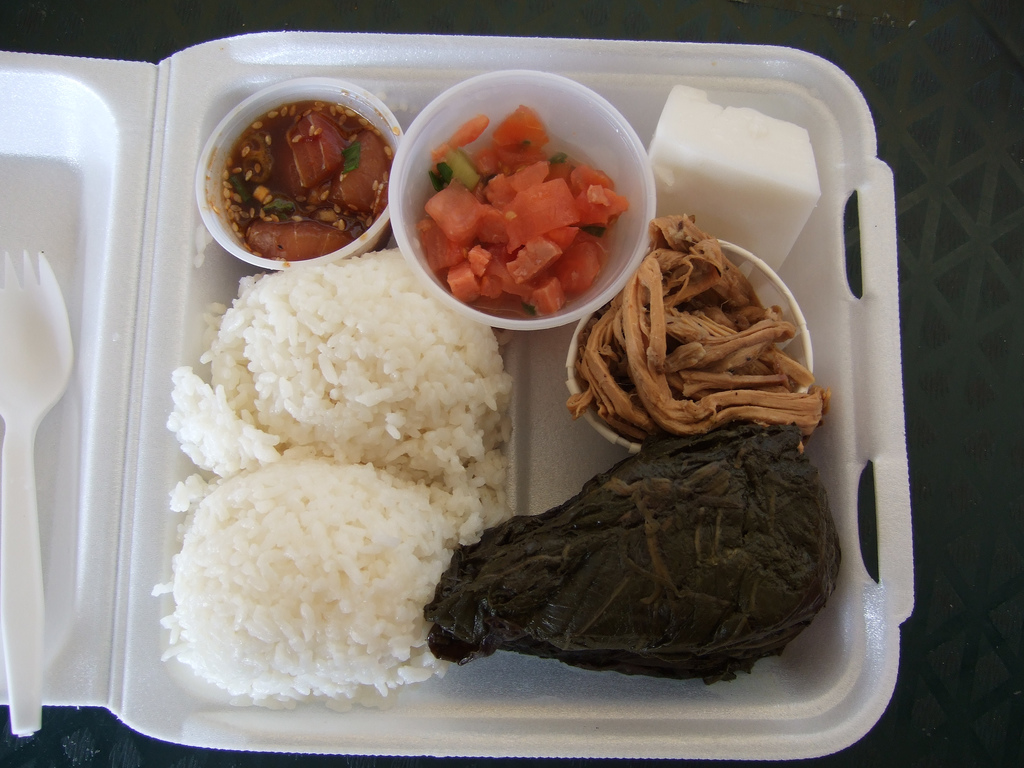

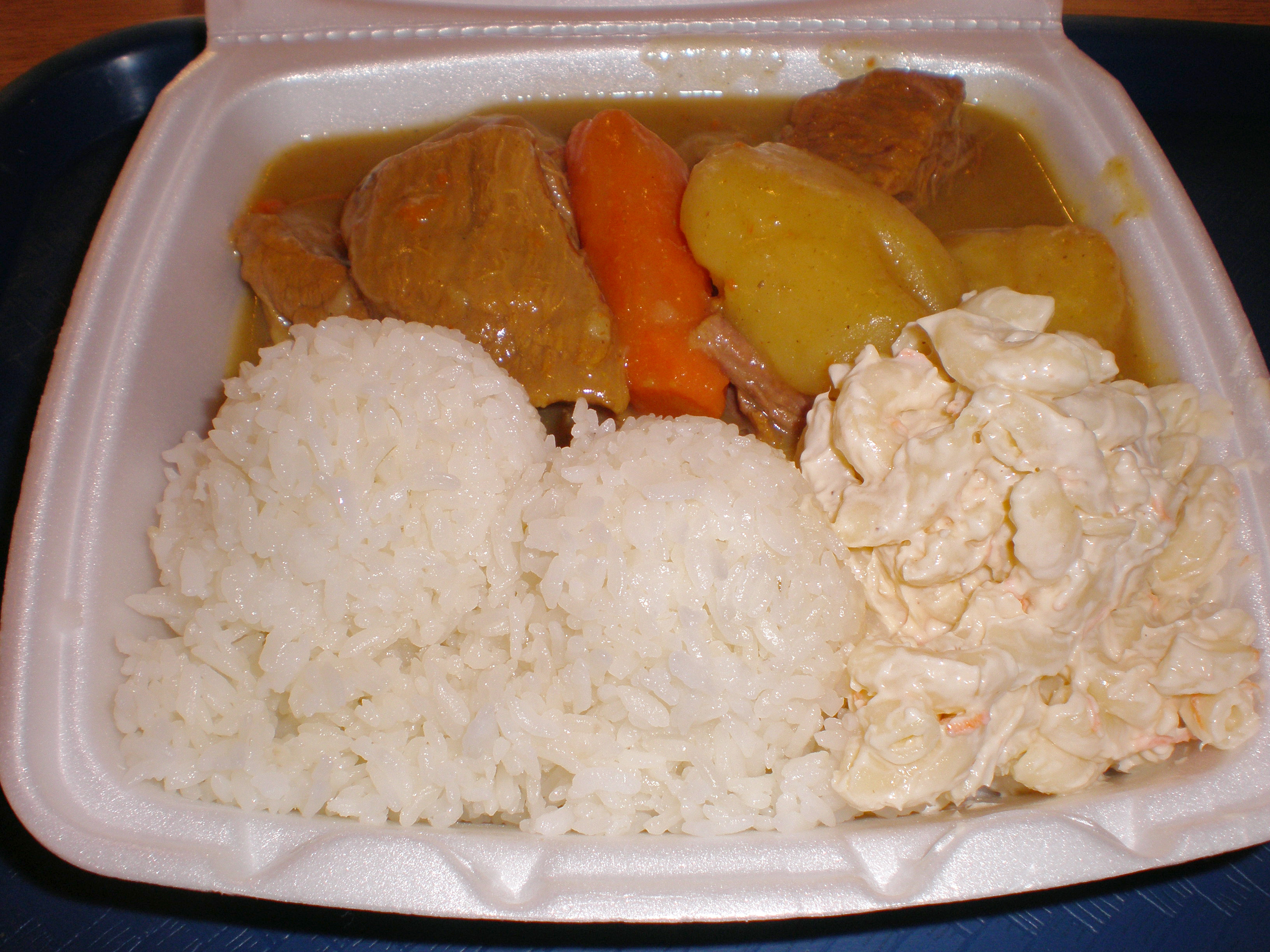
Figures 2, 3 and 4 - Just a few versions of a plate lunch

Figure 5: Spam musubi, a common spammy snack in Hawaii and Japan
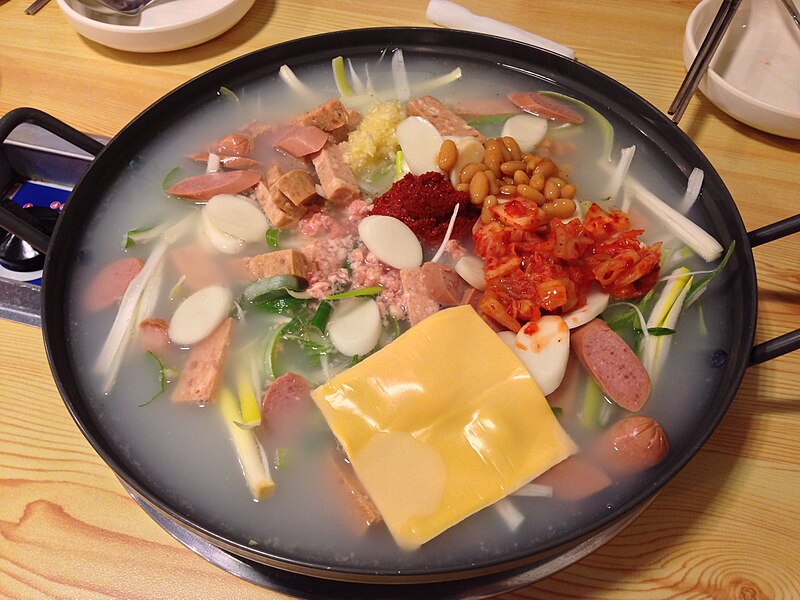
Figure 6: Budae Jjigae, in all its spammy, cheesy, savoury goodness
But when are we actually
going to talk about food, I hear your hungry brain ask. Many cultures lay claim
to a variety of foods, it would be near impossible to consider most foodstuffs
as singular to only one cultural group or one region. AS we discussed in the
previous post, food and culture has processes of changing throughout time.
However, though groups may have overlapping interactions and experiences with
the same or similar food products, this does not mean that all groups have the
same experience or meaning-making for each item. Basically, we don’t get the
same pizza in Naples compared in Chicago (or even within different Italian
regions, for that matter), and the dish itself won’t mean the same in each
place either. The local cultural, historical, agricultural, political and
geographical make-up of a society highly influence how, why and what cultures
do with specific foods and which foods have more or less significance than
others. Certain ingredients may have been more available due to trade with
other groups, the accomodating climates of specific areas, or simply because
they tasted better and so were given more focus. This happened over long
periods of time and experimentation. To say that any one culture simply
“decided” the rules of how it would eat and then closed the book on future edits is kind of ridiculous.
“decided” the rules of how it would eat and then closed the book on future edits is kind of ridiculous.
Take SPAM as a case
study in the many local identities of a global food market. Yes, that pink,
canned, smooth-textured meat product that so many of us have varying memories
of. In the USA, the UK and Canada it can often evoke a period of stress or
hardships, beginning with its use and rationing during the Great Depression and
World War II, yet it upholds different values of family, nostalgia and comfort
food in other parts of the world. First entering the American market under the
Hormel company in 1937, the “potted” meat was a relief for those still
suffering from the financial depression of the late-1920s and 1930s (Ku, 2014,
p. 193). Brand name SPAM became internationally popular between 1939-1942 when
the American military included it as part of their rations during the second
world war (Ku 208-210). The canned meat was shipped and consumed around the
world by soldiers eager for calories and a secure food source. But after years,
many soldiers became sick of eating the same product (Ku, 2014, p. 210). And it
wasn’t only the US military that ate its share of the preserved meat, it was
also provided to American allies during WWII; towards the end of the war, in
1944, 90% of SPAM products were shipped overseas to Britain (Ku, 2014, p. 211).
The South Pacific also saw high degrees of American influence throughout the
19th and 20th centuries, and the corresponding influx of SPAM. Long term
military occupation of the Philippines, China, Japan, Korea, Vietnam, Laos and
Cambodia by the States highly influenced their culinary design (Ku, 2014, p.
212). Think ketchup, elbow macaroni, and processed cheese to name a few.
SPAM is no longer wholly
considered a “symbol of culinary unsophistication” (Ku, 2014, p. 194) or
“Frankenfood” (Ku, 2014, p. 193). It is not merely an insult to “real” food: it
is real food. It is made up of only six ingredients, a far cry from the laundry
list of unpronounceable names that most other processed foods have on their
labels. The pre-cooked pork cuts (pork shoulder and ham), salt, water, potato
starch, sugar and sodium nitrite are all familiar and normalized in other foods
(Ku, 2014, p. 197), so why does SPAM get such a bad rap in North America? Some
people focus on that last ingredient, sodium nitrate, because it can sound a
bit chemical-like. However, it is a common preservative found in most deli
meats – it’s usually what makes the meat pink! Sodium nitrate is ------. Perhaps it’s the idea that soft meat from a
can just doesn’t fulfill the “fresh”, meat-heavy ideals of American food, such
as the burger, ribs or chicken wings. Or maybe it’s just that ubiquitous Monty
Python sketch that had us never wanting to hear the words again… (see video
link below; Ku, 2014, p. 201-202)?
Yet,
throughout much of the coastal Pacific areas it has become a symbol of
childhood comfort, reliability, and even higher-status (Ku, 2014, p. 192-195).
If one could afford to purchase canned goods, they likely had more disposable
income and a fast-paced lifestyle requiring a quick meal – this was a concept
borne out of the women’s workforce movement, post-WWII. If we want to talk
about cultural commodities, Hawaii even has an annual SPAM festival! Ty
Matekowsky says, “that SPAM is viewed more as a dietary staple of the affluent
and moderately affluent than that of the poor [in the Philippines] says a lot
about its negotiated meaning outside the West” (Ku, 2014, p. 194). This
locally-recast, negotiated meaning came about post-WWII, but in the most
different way than the West. It provided a protein source when others were
scarce or impossible to find. It helped many people survive in harsh
conditions. In various parts of Asia, SPAM was less a mystery and maintained its
initial moniker of “miracle meat” (Ku, 2014, p. 196).
SPAM’s
non-perishability means this “king of canned meats” (Ku, 2104, p. 190) can be
stocked (like gold bars), given as gifts (especially during the Korean holiday
of Chuseok), transported around the world and even used to whip up a
deliciously savoury meal by an exhausted parent (Ku, 2014, p. 195 and 210). Its
foreign origins in America contributed to it becoming a higher-status food.
George H. Lewis notes in “From Minnesota Fat to Seoul Food: Spam in America and
the Pacific Rim,” that SPAM for Koreans is a gift that reflects not only status
but respect— “a far cry, indeed, from how it is viewed in America, its country
of origin” (Ku, 2014, p. 194). This is an indication that food not only
undergoes translation when it travels from one location to another, but that it
becomes something other than the original thing. Food translations live in a third-space.
Budae Jjigae, a dish name which literally translates to “army base stew”,
features what seem like “less traditional” Korean food items, like American
cheese, Vienna sausages, macaroni noodles and SPAM among other things. However,
this dish along with its ingredients have been embraced in Korean culture, and
are often even considered traditioanl. As a result of the US military
occupation of Korea many crops were destroyed, and soil was not able to grow reliable
and sustainable food for locals. Many were impoverished, so locals would seek
out food items in the trash or left-behinds of army bases or beg for food items
from soldiers (Ku, 2014, p. 212-213).
Alternatively,
we can look to the the “plate lunch”, common in Hawaii: a dish of steamed white
rice served with a variety of meat-based entrees introduced from Japan, Korea,
Philippines and China (Ku, 2014, p. 216). Hawaiian-born former-US President
Barack Obama called this a favourite!
This dish emerged from
the large amount of foreign labour immigrants who came from varying regions of South
East Asia to work on sugar and pineapple plantations (Ku, 2014, p. 216). This
migration also helped create the uniquely Hawaiian okazuya, or Japanese-American deli which serves a variety of
premade rice-based dishes which reflect the multiplicities within the Islands
(Ku, 2014, p. 217). Christine Yano, writer of “Shifting Plates: Okazuya in
Hawaii” says that this idea is a way for the local to be uniquely expressed.
Here, Yano terms “local” as “a pan-ethnic identity expressive of an
appreciation of the cultures, people and land of Hawai‘i (Ku, 2014, p. 217); it
is that which was formed by native Hawaiians as well as plantation immigrants.
This form of food has since been transported as a transnational commodity
throughout many states in the USA, New Zealand, American Samoa to name a few
(Ku, 2014, p. 217). While cooking styles and knowledges transferred themselves,
the ingredients were not always available as they were at “home”. This called
for creativity and fusion and alternative ingredients taking the place of “originals”
– an idea we will come to in a later post. American anthropologist Anna Tsing
refers to this pushback against global homogeneity by using the plural term “globalisms” (Tsing, 2008, p. 71;
emphasis mine). We let the global appear homogenous – as the latest stage in a
macro narrative. Local “versus” global. We long to find cultural specificity
but cannot do this without picking out localities. There is a cultural
predisposition of the West to form progressive narratives, where societies
consistently move from simple to complex systems; this was the initial hope for
globalization. However, Tsing disagrees with this progressivist ideology and
instead appears to lean towards cultural relativism. Relativism understands
that cultures are always progressive, in accordance with their own contexts. Cultures
do not simply move linearly but laterally, like branches of an ever expanding
tree.
Today there are at least
twenty (double digits!) kinds of SPAM, and no worries it’s not just different
variations of low-sodium. The SPAM official website (https://www.spam.com/
*Turkey SPAM is
especially popular in regions with large Muslim populations.
Ku notes that SPAM could
be a food which has recently crossed a threshold into “authentically” Asian
food – but then quickly notes this title likely does not even matter (Ku, 2014,
p. 222). The fact that the food product has taken such a hold in various Asian
cultural lexicons and practices identifies it as an important product. It does
not need to have a status placed on it in some sort of official forum. Like
foods around the world, as much as we may want to believe otherwise, there is
no clear definition of what is Korean, Japanese, Chinese, Hawaiian, American,
Italian, Mexican etc.
If it wasn’t for the
local negotiation of food meanings, values and efficacy the world would be at a
loss for so many dishes like SPAM musubi, budae jjigae, SPAM tacos, fried SPAM
sandwiches, SPAM fried rice...I could go on...Spam, Spam, Spam! Long live the
king (of canned meats)! It is these in-between
spaces of negotiated meaning where we can understand that not only do different
cultures use and are shaped by food to create heterogenous identities, but that
we also share some feature within these differences. We will never be totally
the same, nor can our differences create hard and fast boundaries (except for
the ones we believe we maintain).
Click here to relive the
glory days: Monthy Python's "SPAM" sketch (MontyPython OfTheAir, 2013) - sound only, due to copyright.
______________________________
References
Ku, R. J.-S.
(2014). Dubious Gastronomy: The Cultural Politics of Eating Asian in
the USA. Honolulu: University of Hawaii Press. Retrieved from http://ezproxy.macewan.ca/
Tsing, A. The global
situation. In J. X. Inda and R. Rosaldo (eds.), The Anthropology of
Globalization (pp. 66-98). Malden, MA: Blackwell Publishing Ltd.
MontyPython OfTheAir. (2013). Spam [video]. Retrieved from https://www.youtube.com/watch?v=jrZyZn5nVks.
*All images taken from
creative commons
Comments
Post a Comment